

In a little more than a month, California voters will decide whether to levy a modest tax on the state’s disproportionate population of billionaires to fund health care or, put another way, end civilization as we know it.
That is at least the impression left by the utterly unhinged campaign against Proposition 40, which has deployed just the sort of excess of resources one might expect from a bunch of billionaires. All in all, these modern-day robber barons have made a better case for this little ballot measure than any lunatic lefty possibly could.
Big Tech tycoons, venture capitalists and other fat California cats have already spent about $200 million — which is nothing to them, after all — to defeat the proposed 5 percent tax on billionaires’ wealth, outspending proponents such as the health care workers’ union behind the measure by roughly five-to-one. About half of that was put up by Google cofounder Sergey Brin, the fifth-richest person in the world according to Forbes, who has explained that he doesn’t want California to be evil like the Soviet Union, from which his family emigrated in 1979.
That’s right: Allowing Brin to keep only 95 percent of his unfathomable holdings would make California exactly like a communist dictatorship that has not existed for four decades.
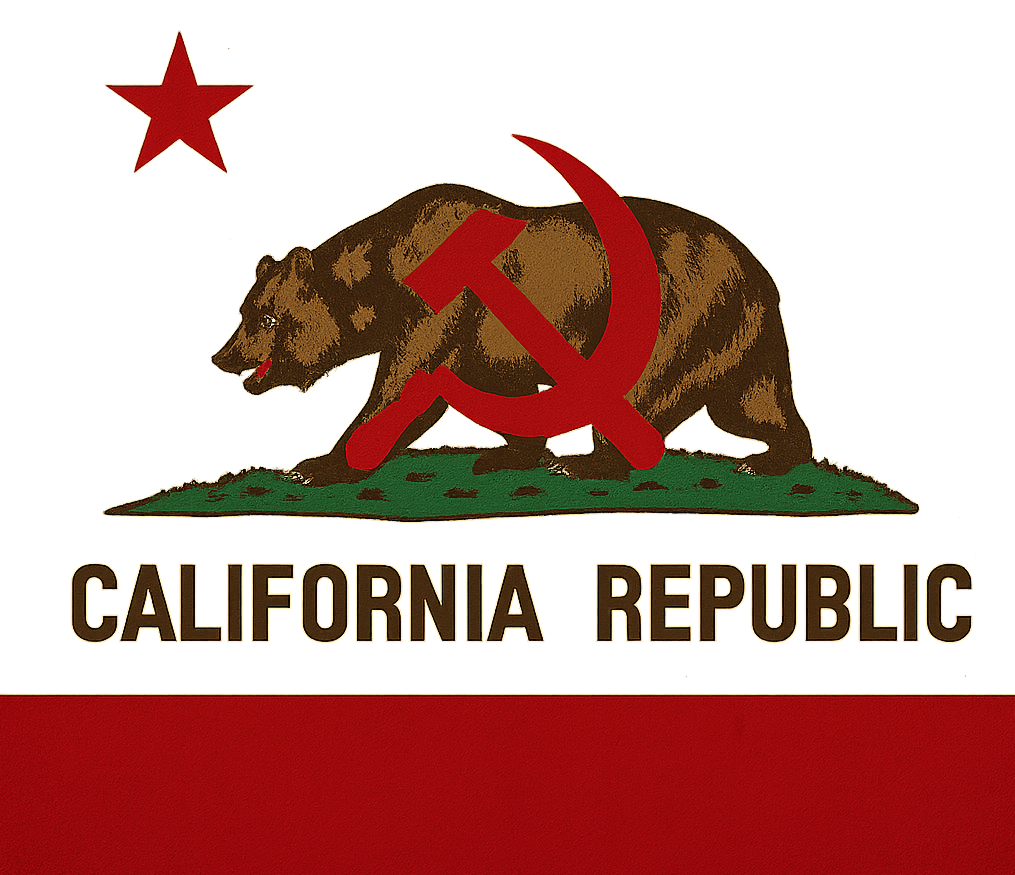
But grotesque campaign spending is only the beginning of Brin and company’s battle to wrest the state from a glide path toward grocery shortages and secret police. The billionaires have also contrived to place not one but two propositions of their own on the ballot, which is unfortunately what California-style direct democracy looks like. By prohibiting or restricting the sort of taxation Prop. 40 would undertake in ways that won’t be obvious to many voters, the competing measures are designed to conflict with and therefore undo the levy even if it passes. (Under California law, a successful contradictory proposition can nullify another if it gets more votes.)
While Prop. 40 was narrowly endorsed by California’s dominant Democratic Party after much sturm und drang, it’s been opposed by key party powers, including outgoing Gov. Gavin Newsom; his likely successor, Xavier Becerra; and several unions and other ostensibly liberal interest groups. Ever preferring a meaningless gesture to meaningful risk, Newsom floated a series of highly theoretical proposals he labeled a “national billionaires’ tax” even as he opposed a real plan in the only place where any appreciable number of people listen to him.
“Money buys influence, and influence rewrites the rules,” Newsom scolded national leaders even as he demonstrated as much with respect to his own government.

The measure’s extraordinary opposition doesn’t end there. This month, the Los Angeles Times editorial board — which was effectively eliminated by the newspaper’s ultrarich owner, Patrick Soon-Shiong, more than a year ago — mysteriously materialized from oblivion like some billionaire Brigadoon to add its formerly respected opinion to the debate. In coughing up a pale, sub-400-word imitation of an editorial, the Times — which had not so opined on anything or employed an editorial writer since March 2025 — reduced a Pulitzer-winning journalistic institution to a single-issue mouthpiece, motivated to influence public policy only insofar as it directly affects its owner’s obscene wealth.
Prop. 40 is not alone in provoking such paroxysms. From Washington state’s recently legislated millionaire tax to New York’s election of a left-leaning mayor, every potential incremental infringement on the wealthy can be counted on to provoke political upheaval in a system that is increasingly in thrall to the superrich. The invocation of the socialism bugaboo is as inevitable in every case as the threat of an unlikely zillionaire exodus.
Granted, Prop. 40 raises plenty of legitimate questions, but they spring partly from the power of billionaires to kill most such proposals in the crib. An initiative proposed by a health care union with a checkered record is not the best way to make policy, for example, but we probably shouldn’t expect such a measure to arrive through the usual billionaire-influenced channels. A wealth tax is an unorthodox idea, sure, but try taxing a billionaire the same way you would a teacher. It’s an unusual one-off proposal, true, but it comes in the wake of last year’s remarkable federal gifts to the wealthy, funded partly by cuts to health care funding. And yes, the ultimate fiscal and other impacts are difficult to predict, but that is to some extent because nothing like it has ever been tried before.
Like the billionaire-led campaign against Proposition 40, the measure’s flaws and uncertainties are in large part a function of the immense and growing power and wealth it attempts to address. The opportunity to vote for anything like it is valuable and probably fleeting.
Well said, Josh. To the parapets with the parakeets! Go Prop 40!
Taxing them? Ohhh, the day the IRS knocks at their door ...